
Getting Your Tubes Tied: Is Tubal Ligation Your Best Birth Control Option?
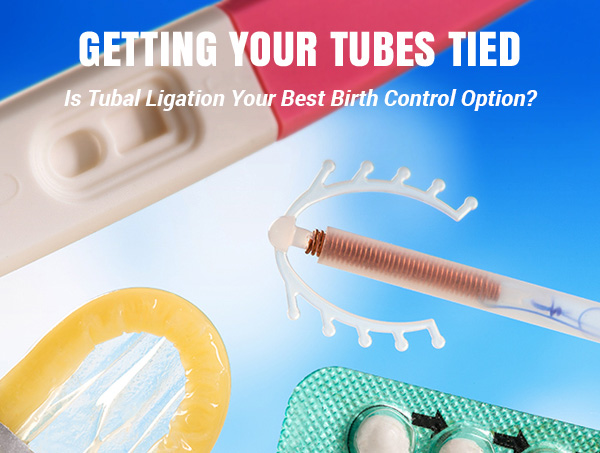
Tubal ligation, more commonly referred to as getting your “tubes tied,” is a common procedure used as a form of birth control. The surgeon makes a small incision in the abdomen and seals off both Fallopian tubes. This prevents sperm from reaching the eggs. The surgery can be done when convenient for the woman including right after giving birth.

The Benefits of Tubal Ligation

There are other forms of long term birth control, such as:  implants which work for three years or IUDs which can last from three to 10 years. Tubal ligation is the only available procedure that is permanent.

Once the procedure is done, you never have to worry about doing anything else to prevent pregnancy but you still will need to use protection from STDs. Tubal ligation is the most effective form of birth control next to abstinence. It doesn’t change hormone levels so it will not affect sex drive or mood.

There is a very minimal risk of accidental pregnancy, but the chances of conception are extremely low. Less than five women in 1,000 will get pregnant after the first year. Approximately two women in 100 will conceive within 10 years.

Things to Consider Before Tubal Ligation

Every woman should consider before undergoing a tubal ligation is the permanence of the procedure. This is especially important for women under 35 who may regret not being able to have kids in the future. Circumstances and people can change over the years, so this is something that should not be taken lightly. Contact your OBGYN to discuss the pros and cons of tubal ligation and to schedule the procedure.


Similar Posts

  • Pregnancy and Mental Health: When Worry Becomes Something More

    Pregnancy can bring joy, excitement, and hope, but it can also introduce stress, uncertainty, and emotional ups and downs. Most expectant mothers experience some amount of worry, especially as their bodies change and they anticipate labor, delivery, and parenthood. However, anxiety and depression during pregnancy represent real medical concerns that you should never dismiss as…

  • Can You Get STDs from Oral Sex?

    There are some things that any sexually active person should know – like how an STD (sexually transmitted disease) or STI (sexually transmitted infection) is spread. There is a common misconception that you cannot share an infection through oral sex. This is not true. There are diseases that can be passed orally. Human Papillomavirus (HPV)…

  • Cryoablation

    Some of our patients experience painful periods that last for an extended period. For those severe cases, we offer a solution called Cryoablation Endometrial Ablation. Cryoablation is a simple procedure done in the office without anesthesia. The process works by cooling the uterus and lasts for about 30 minutes with no restrictions after the fact. …

  • World Dense Breast Day

    On National #WorldDenseBreastDay, we’re joining a global effort to help raise awareness and support education on dense breasts. #DYK? Dense breast tissue increases a woman’s risk of developing breast cancer and makes breast cancer harder to find on a traditional mammogram. At [insert practice name], we are on a mission to improve women’s healthcare. Today…

  • Female Sexual Dysfunction

    Sexual dysfunction is a common problem that is embarrassing for some people. Research has suggested that up to 43% of women and 31% of men experience some degree of difficulty during intercourse. Even though many people are reluctant to seek help, most cases are treatable. Sexual Dysfunction Causes Female sexual dysfunction causes fall into two…