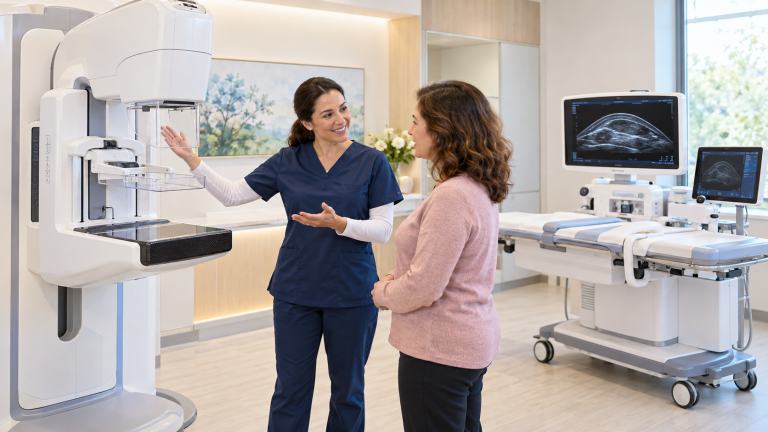
Does a Mammogram Hurt? What to Expect and How to Prepare

Mammogram Discomfort Is Usually Brief
One of the most common questions before a mammogram is whether it will hurt. The honest answer is that the experience varies.
Some women feel firm pressure, while others experience a few seconds of pain during compression. The discomfort usually ends as soon as the technologist releases the plate.
Concern about discomfort should not prevent you from scheduling recommended screening. Understanding why compression is used and taking a few practical steps can help make the appointment more manageable.
Tell the technologist about any sensitivity, injury, implants or areas that are already painful before positioning begins.
Why Breast Compression Is Necessary
During mammography, the breast is placed between two plates and compressed for each image.
Compression spreads the tissue so overlapping structures are easier to see. It also keeps the breast still, reduces blur and allows a clear image to be produced with the lowest practical radiation exposure.
The technologist must apply enough compression to obtain diagnostic-quality images, but you should still communicate throughout the exam.
If the pressure becomes difficult to tolerate, say so immediately. The technologist may be able to pause, adjust the position or explain how much longer the image will take.
Choose a Comfortable Time When Possible
Breasts can be more tender before and during a menstrual period. If you notice a predictable pattern, consider scheduling your mammogram for a time in your cycle when tenderness is usually lower.
Do not delay an urgent diagnostic evaluation because of cycle timing.
If your clinician says it is safe for you, an over-the-counter pain reliever before the appointment may reduce discomfort.
Ask first if you have medication allergies, kidney or liver disease, a bleeding disorder, take blood thinners or are unsure which product is appropriate.
Prepare for Easier Positioning
Wear a two-piece outfit so you can undress only from the waist up.
Avoid deodorant, antiperspirant, lotion, powder, cream and perfume on your breasts and underarms on the day of the exam because some products can create spots on the image.
Bring information about previous mammograms and arrange to have earlier images transferred if they were completed elsewhere.
Limit unnecessary tension by allowing enough travel time and arriving a few minutes early. Slow breathing and relaxing your shoulders can make positioning easier.
The technologist may ask you to turn, lift your arm or hold your breath briefly while an image is taken.
Do Not Ignore Ongoing Breast Pain
Breast pain is common and is often not caused by cancer, but new, persistent or localized pain should be discussed with a healthcare professional.
A routine screening mammogram may not be the correct appointment when symptoms are present. The office may recommend a clinical exam, diagnostic mammogram, ultrasound or another next step.
WHMC offers 3D mammography in West Bloomfield with an experienced screening team.
If discomfort has made you postpone your mammogram, let the office know when scheduling so your concerns can be addressed. Call (248) 932-9223 or contact WHMC online.
When Anxiety Is the Bigger Barrier
For some patients, worry about results, past trauma or feeling exposed causes more distress than the compression itself.
Tell the scheduling team if you are anxious or need additional explanation. You can ask the technologist to describe each position before touching or moving you and to tell you when compression will begin and end.
Consider bringing a written list of concerns so you do not have to remember everything during the appointment. Ask whether a support person may accompany you to the facility, even if that person cannot enter the imaging room.
Most importantly, do not feel embarrassed about expressing discomfort or fear. Clear communication helps the care team provide a more respectful experience and may make it easier for you to return for future recommended screening.
Plan for a Short Appointment With Long-Term Value
The compression portion of each image lasts only a short time, while the information from regular screening can support years of comparison.
Give yourself time to arrive without rushing, communicate openly and focus on one image at a time.
If you had a difficult previous exam, mention it when scheduling. A thoughtful plan can make the next mammogram more comfortable and less intimidating.