Breast Changes You Should Have Checked by a Provider

Breasts can change throughout your life. Hormonal fluctuations, pregnancy, breastfeeding, menopause, medications and noncancerous breast conditions can all affect how your breasts look or feel.
Many breast changes are not caused by cancer. However, a new, unexplained or persistent change should be evaluated by a healthcare professional. Knowing what is normal for your body can help you recognize when something deserves attention.
A New Lump or Area of Thickening
A new breast lump is one of the most recognized reasons to contact a provider. Breast lumps can feel hard or soft, painful or painless, smooth or irregular.
Many lumps are benign, meaning they are not cancerous. Cysts, fibroadenomas and hormonal changes are common causes. Still, it is not possible to identify the cause of a lump by touch alone.
Contact your healthcare provider if you feel a new lump, an area of thickening or breast tissue that feels noticeably different from the surrounding area.
Changes in Breast Size or Shape
Breasts are rarely identical, and some natural asymmetry is common. What matters is whether you notice a new or unexplained change.
Schedule an evaluation if one breast suddenly appears larger, lower or differently shaped. Swelling in all or part of a breast should also be discussed, even if you cannot feel a distinct lump.
Dimpling, Puckering or Skin Changes
Changes in the skin over the breast can sometimes signal an underlying concern. Contact your provider if you notice:
- Dimpling or puckering
- Skin that resembles the texture of an orange peel
- Persistent redness
- Unexplained warmth or swelling
- Thickened, dry, scaly or flaky skin
- A rash on or around the nipple
Skin changes can have several possible causes, including irritation or infection. A professional evaluation can help determine whether additional testing or treatment is needed.
Nipple Changes or Discharge
A nipple that has always pointed inward may be normal for you. A nipple that recently begins turning inward should be evaluated.
You should also contact your provider about unexpected nipple discharge, especially when it is bloody, clear, occurs without squeezing or comes from only one breast.
Pregnancy and breastfeeding commonly cause breast milk production. Other types of discharge may be related to medications, hormonal changes, noncancerous conditions or an issue that requires further testing.
Persistent Pain in One Area
Breast tenderness can occur with menstrual cycles, pregnancy, menopause and hormonal medications. Pain that comes and goes in both breasts is often related to hormonal changes.
Persistent pain in one specific area deserves attention, particularly when it is accompanied by a lump, swelling, nipple change or skin change.
Breast pain alone is not usually a sign of cancer, but ongoing or unusual pain should still be discussed with your healthcare provider.
A Lump Under the Arm or Near the Collarbone
Breast tissue and lymph nodes extend beyond the area many people consider the breast. A lump or swelling under the arm or near the collarbone can have several causes, including infection or inflammation.
If the swelling does not resolve or you cannot identify an obvious cause, schedule an evaluation.
Do Not Wait for Your Next Mammogram
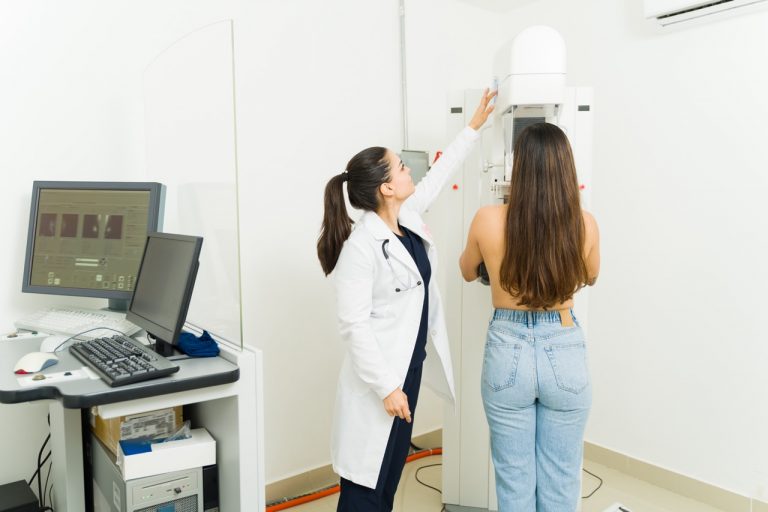
A routine mammogram screens for breast cancer in patients who do not have symptoms. If you have discovered a breast change, contact your provider rather than waiting for your next annual screening.
Your provider may recommend a clinical breast examination, diagnostic mammogram, ultrasound or another evaluation based on your symptoms and health history.
Women’s Health and Menopause Center provides 3D mammography and breast imaging services in West Bloomfield. Appropriate patients with dense breast tissue may also be evaluated for Automated Breast Ultrasound.
Know What Is Normal for You
There is no single appearance or texture that is normal for every woman. Breast awareness means becoming familiar with your own body so you can recognize a meaningful change.
You do not need to diagnose the problem yourself. If something looks or feels different, write down when you first noticed it and whether it changes during your menstrual cycle. Share those details with your provider.
Schedule a Breast Health Evaluation
Most breast changes have noncancerous explanations, but every new or unusual change deserves appropriate attention. Seeking an evaluation can provide answers and help ensure that any necessary follow-up is not delayed.
If you have noticed a breast lump, nipple change, unusual discharge, skin change or persistent pain, call Women’s Health and Menopause Center at (248) 932-9223 or request an appointment online.
Our office is located at 5777 West Maple Road, Suite 200, West Bloomfield, Michigan 48322.