What to Expect During Your First Mammogram
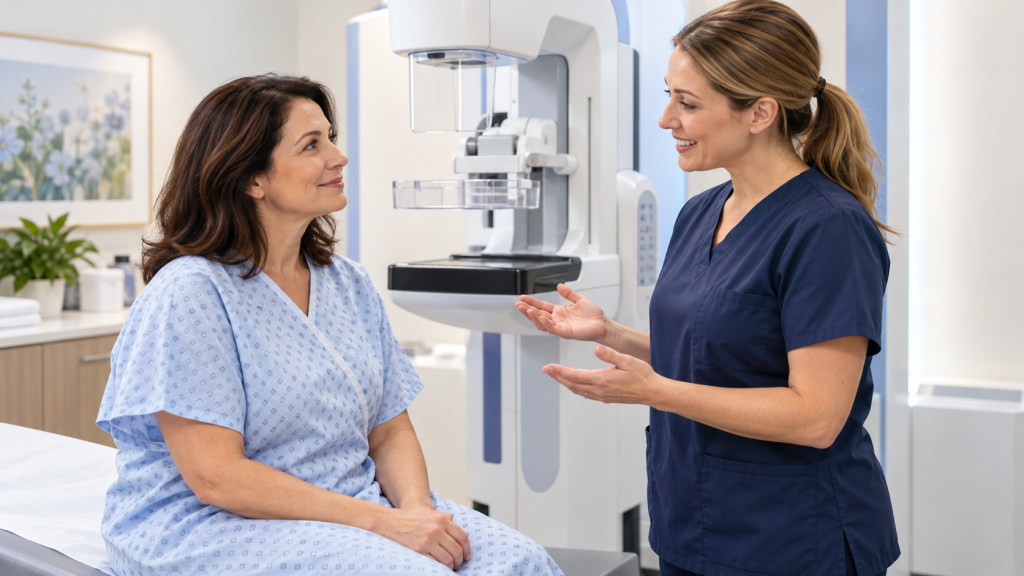
Your First Mammogram Can Feel More Manageable With a Plan
It is normal to feel uncertain before your first mammogram. Most screening appointments are straightforward and brief, and knowing what will happen can make the experience less stressful.
A mammogram uses low-dose X-rays to look for breast changes that may be too small to feel during a physical exam.
Routine screening is generally intended for people who do not have a new breast symptom. If you have found a lump, noticed nipple discharge, developed skin changes or have another concern, tell the office when scheduling. You may need a diagnostic mammogram or another evaluation instead of a standard screening appointment.
Before Your Appointment
When scheduling, share whether you have breast implants, are pregnant or may be pregnant, are breastfeeding, have had breast surgery or have previous breast imaging from another facility.
Prior images are valuable because the radiologist can compare them with your new exam and identify whether an area is stable or has changed.
If your breasts become tender before or during your menstrual period, consider scheduling for a time when they are usually less sensitive.
On the day of the exam, do not apply deodorant, antiperspirant, powder, lotion, cream or perfume on your underarms or breasts. Some products contain particles that may appear on the images. Wear a two-piece outfit so you only need to undress from the waist up.
What Happens in the Mammography Room?
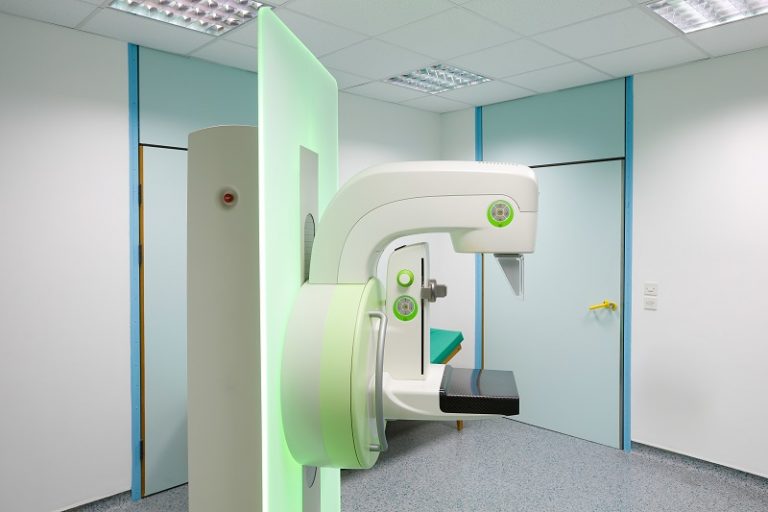
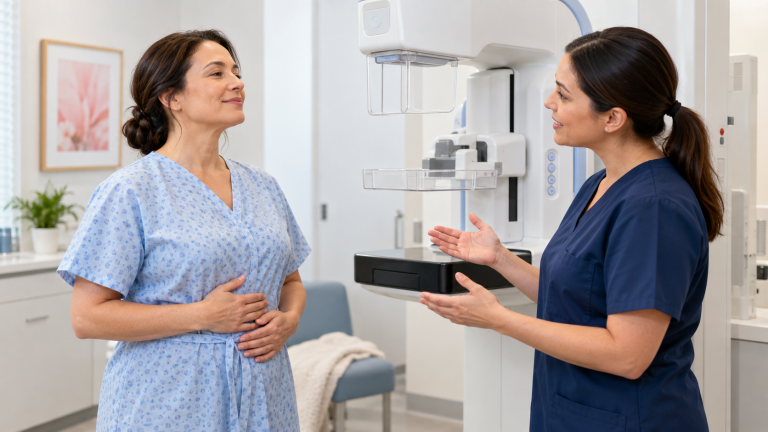
A mammography technologist will explain the process and ask relevant questions about your history. You will stand in front of the mammography unit while the technologist positions one breast on the platform. A second plate lowers to compress the tissue for several seconds while the image is taken.
Compression can feel tight or uncomfortable, but it serves an important purpose. It spreads the tissue so structures are easier to see, limits movement that could blur the image and helps reduce the amount of radiation needed.
The technologist will reposition you for additional views and repeat the process on the other breast. A 3D mammogram captures images from multiple angles while the breast is compressed.
Will Your First Mammogram Hurt?
Everyone experiences compression differently. Some women describe pressure, while others experience brief pain. Tell the technologist if you are especially sensitive or if the discomfort is difficult to tolerate. Clear communication can help with positioning and timing.
If your healthcare provider says it is safe for you, an over-the-counter pain reliever before the appointment may help reduce discomfort.
Do not take a medication that is new to you without checking whether it is appropriate, especially if you have allergies, take blood thinners or have another medical condition.
Results and Possible Next Steps
After the images are reviewed, you will receive a report that includes an overall assessment and information about your breast density.
Many screening mammograms are normal. Sometimes the radiologist needs additional images or ultrasound to evaluate an area more closely. A callback does not mean that you have cancer. It means more information is needed.
WHMC offers 3D mammography and MammoScreen AI support at its West Bloomfield office.
If you are ready to schedule your first mammogram, call (248) 932-9223 or request an appointment online.
Questions You Can Ask Before Leaving
Before the appointment ends, ask when and how you should expect results. Confirm that the imaging facility has the correct contact information for you and the healthcare provider who ordered the exam.
If you use an online patient portal, ask whether the report will appear there and whom to contact if you do not see it within the expected timeframe.
You can also ask how to obtain a copy of your images for future comparison, especially if you expect to move or use a different facility later.
When results arrive, review the overall assessment, recommended follow-up and breast-density statement. If any language is unclear, contact your provider rather than trying to interpret the report alone.
Completing the mammogram is important, but closing the loop on the results is part of the screening process too.
Make the Second Mammogram Easier
Save the date, facility name and result from your first exam in a secure place. When the next screening is due, returning to the same facility or transferring the original images can simplify comparison.
If the experience was uncomfortable, note what helped and share that with the next technologist. A first mammogram establishes both a medical baseline and a practical routine you can improve over time.