Irregular Periods, Mood Swings, and Sleep Changes: Could It Be Perimenopause?
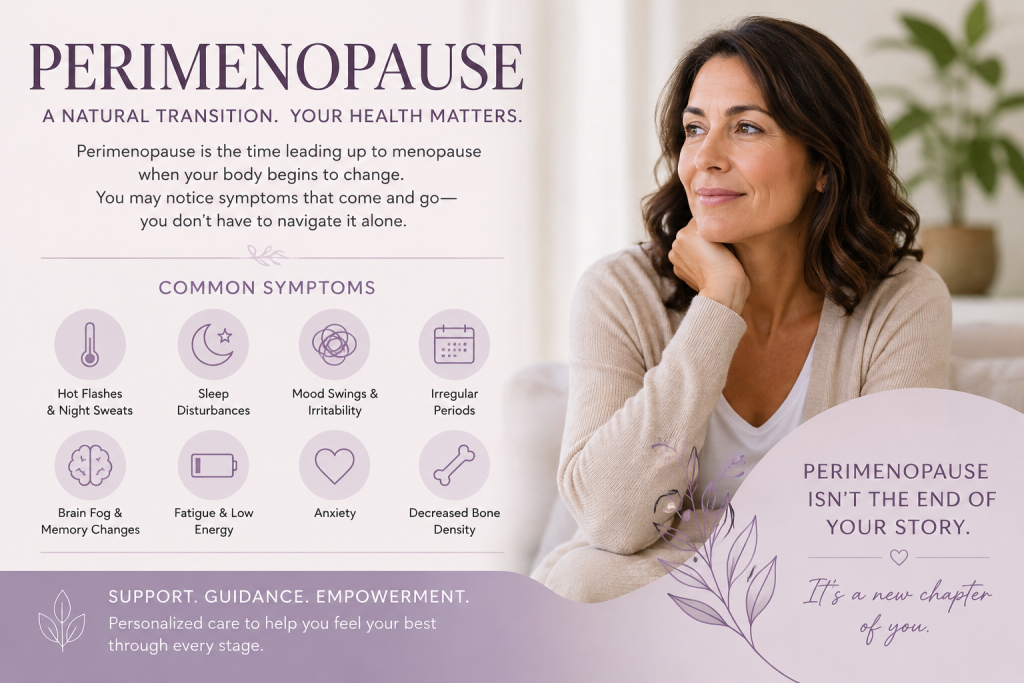
Many women in their late 30s and 40s start noticing changes that feel hard to explain. Periods may become less predictable. Sleep may feel lighter or more interrupted. Mood can shift faster than usual. For some women, these changes happen gradually. For others, they seem to appear all at once. In many cases, the cause may be perimenopause.
Perimenopause is the transition leading up to menopause. During this stage, hormone levels begin to fluctuate, especially estrogen. ACOG explains that the menopause transition can bring changes in menstrual cycles as well as symptoms such as hot flashes, sleep problems, and vaginal dryness.
What Is Perimenopause?
Perimenopause is not the same as menopause itself. Menopause is officially reached after 12 straight months without a period. Perimenopause is the stage before that, when ovarian hormone production becomes more variable and symptoms may start to appear. This transition can last for several years.
Because perimenopause can overlap with a busy stage of life, many women mistake the symptoms for stress, burnout, poor sleep habits, or simply getting older. But cycle changes, mood shifts, and sleep disruption often have a hormonal component that deserves attention.
Irregular Periods in Perimenopause
One of the most common early signs of perimenopause is a change in menstrual timing or flow. Periods may come closer together, farther apart, feel heavier, lighter, shorter, or longer than usual. These irregular periods happen because ovulation becomes less predictable as hormone levels fluctuate.
That said, irregular bleeding should not always be assumed to be perimenopause. Heavy bleeding, bleeding after sex, bleeding between periods, or very prolonged cycles may need evaluation for other causes. It is important to talk with your provider if something feels new, disruptive, or unusually intense.
Mood Swings and Emotional Changes
Mood changes can be one of the most frustrating parts of perimenopause. Some women notice irritability, anxiety, sadness, lower stress tolerance, or a shorter emotional fuse. Sleep problems can make that worse, and so can hot flashes and night sweats.
These symptoms are real. They are not a personal failure, and they are not something women should feel embarrassed to mention. Hormonal shifts can affect how you feel mentally and emotionally, not just physically. When mood changes begin to interfere with work, relationships, or quality of life, it is time to bring them up during a visit.
Sleep Changes During Perimenopause
Sleep often becomes more difficult during the menopause transition. Some women wake up more often during the night. Others have trouble falling asleep, or they wake too early and struggle to get back to sleep. Night sweats and hot flashes can be a major trigger, but even women without dramatic vasomotor symptoms may notice lighter, less restorative sleep.
Poor sleep can then amplify other symptoms. It can worsen mood swings, fatigue, brain fog, cravings, and overall resilience. That is one reason sleep changes should not be brushed off as minor. They can affect the whole picture.
Other Signs That May Point to Perimenopause
In addition to irregular periods, mood swings, and sleep disruption, women may also notice:
Hot Flashes or Night Sweats
These are classic symptoms of the menopause transition.
Vaginal Dryness
ACOG notes that lower estrogen levels can contribute to vaginal dryness and discomfort.
Changes in Sexual Comfort
Pain with intercourse or less natural lubrication may become more noticeable over time.
Brain Fog or Trouble Concentrating
Some women describe this as feeling less sharp, more forgetful, or mentally tired.
When to Talk to Your Provider
You do not need to wait until symptoms become severe. If your cycles are changing, your sleep is worsening, or your mood feels less stable than usual, it is reasonable to schedule an appointment. The right evaluation can help determine whether your symptoms are likely related to perimenopause or whether another medical issue may also be involved.
Treatment is not one-size-fits-all. Some women benefit from lifestyle changes and sleep support. Others may need symptom-targeted treatment or discussion of hormone therapy, depending on age, symptoms, health history, and goals. ACOG notes that hormone therapy can help with symptoms such as hot flashes and vaginal dryness for appropriate patients.
You Deserve Answers, Not Guesswork
Perimenopause can begin before many women expect it, and the symptoms can affect much more than periods. When irregular cycles, mood changes, and poor sleep start interfering with how you feel, it is worth getting clarity.
At Women’s Health and Menopause Center, we help women make sense of the transition with care that is personalized, supportive, and grounded in women’s health expertise.
Internal Linking Opportunities: Menopause Care, Hormone Therapy, Women’s Wellness Visits, Vaginal Dryness Treatment, Bone Health Support